 English
 Faculty News
Faculty of Agriculture Organizes Symposium on Meat Production,Food Safety, and Climate Change

Under the auspices of Professor Dr. Abdelaziz Konsowa, President of Alexandria University, the Faculty of Agriculture, in cooperation with the Egyptian Society for Poultry Science, organized its annual symposium entitled “Strategies for the Sustainable Production of Animal Protein under Conditions of Climate Change,” in which the guest speakers were Dr.Tarek Hassan AEl-Houbi, Chairman of the Board of Directors of the National Food Safety Authority, and Dr. Yehia Zakaria Eid, Dean of the Faculty of Agriculture in Kafr El-Sheikh.
Dr. Mohamed Bahey El-Din, Dean of the Faculty of Agriculture, and Chairman of the Board of Directors of the Egyptian Poultry Science Society, indicated that the meeting discussed ways to activate joint efforts between Alexandria University and the National Food Safety Authority, to prepare qualified cadres of inspectors to absorb and implement all binding technical regulations and rules set by the Authority to serve as the main reference for implementing foundations of food safety in Egypt.
Dr. Yehia Eid referred to the issue of climate change as one of the most important challenges facing the world at the present time, as it affects many vital sectors, including the animal production sector. He explaine that rising temperatures and changing climate patterns lead to a decrease in animal productivity, an increase in production costs, and the emergence of new diseases. He also pointed out that achieving sustainable production of animal protein under conditions of climate change requires following a set of strategies, including improving the productive efficiency of animals through the use of modern technologies, improving farm management, rationalizing the use of resources, and reducing the dependence of animal production on non-renewable resources through the use of sustainable food, recycling waste and reducing greenhouse gas emissions through the use of climate-smart agricultural methods. Dr. Eid pointed out that achieving these strategies requires coordinating efforts between government agencies, the private sector and civil society, in order to ensure the production of sustainable, safe and environmentally friendly animal protein.
Dr. Tarek El-Houbi, Chairman of the Board of Directors of the National Food Safety Authority, also referred to the National Food Safety Authority Law No. 1 of 2017 and its important and vital role as a service body responsible for monitoring food handling and safety in Egypt in providing healthy, safe and sustainable food to the Egyptian citizen. He stressed on the authority’s scientific and societal role and its contribution to building a new generation of examiners, pointing out the importance of linking the higher education system, scientific research, and mechanisms for implementing food safety in Egypt, by graduating generations who are scientifically and practically qualified and capable of managing the food safety system.
It is worth noting that the National Food Safety Authority implemented a training program on “The Tasks of the Food Safety Authority in Sea Ports” for 26 students among the top graduates of the Faculty of Agriculture at Alexandria University, during the period from the 1st until the 30th of the current month. The training program included a general introduction to the Authority’s Establishment Law No. 1 of 2017 and Executive Regulations No. 412 of 2019, and an introduction to the role and tasks of the National Food Safety Authority in monitoring Egypt’s imports and exports of food products, as well as the binding technical rules issued by the Authority, relevant legislation, and Egyptian standard specifications. The training program also included: Numerous field visits to food import and export inspection areas, and training according to the latest methods of examining samples of food commodities and various agricultural crops.
Discussing Cooperation between Faculty of Fine Arts, Alexandria University, and Bauhaus University in Germany
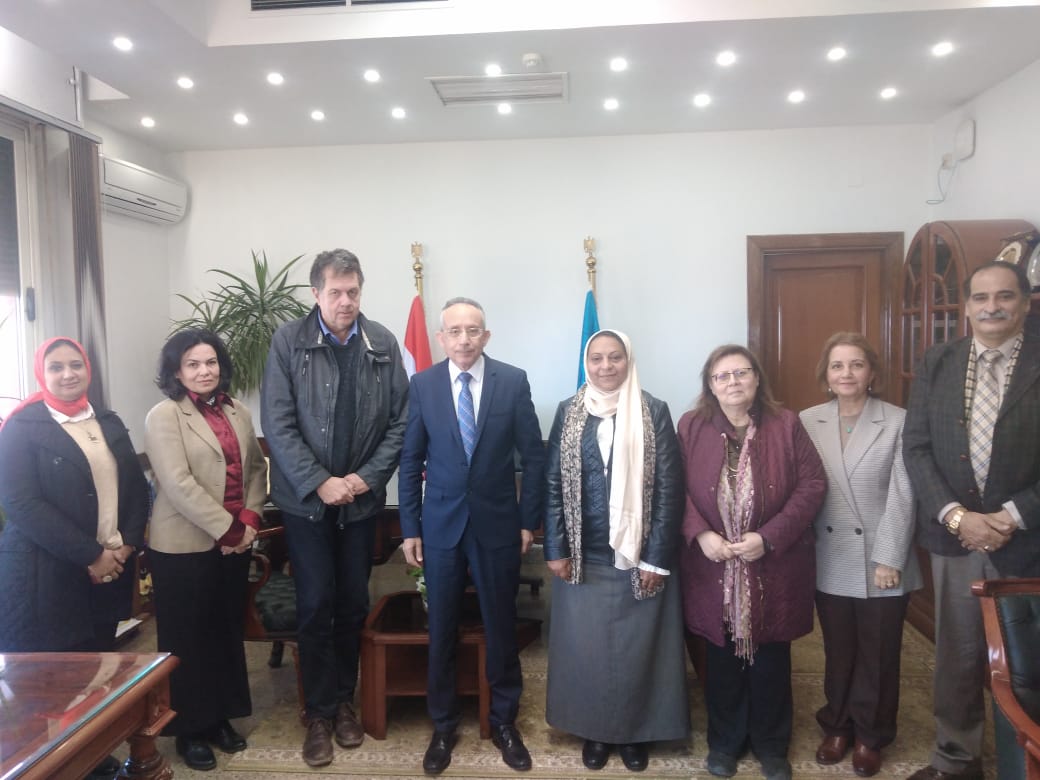
Dr. Ashraf El-Ghandour, Vice President for Graduate Studies at Alexandria University, received Dr. Frank Eckhardt, Head of the Planning and Social Studies Department at the Bauhaus University in Weimar, Germany, with the aim of discussing ways of cooperation between the Faculty of Fine Arts at Alexandria University and the Bauhaus University in Germany in areas of common interest.
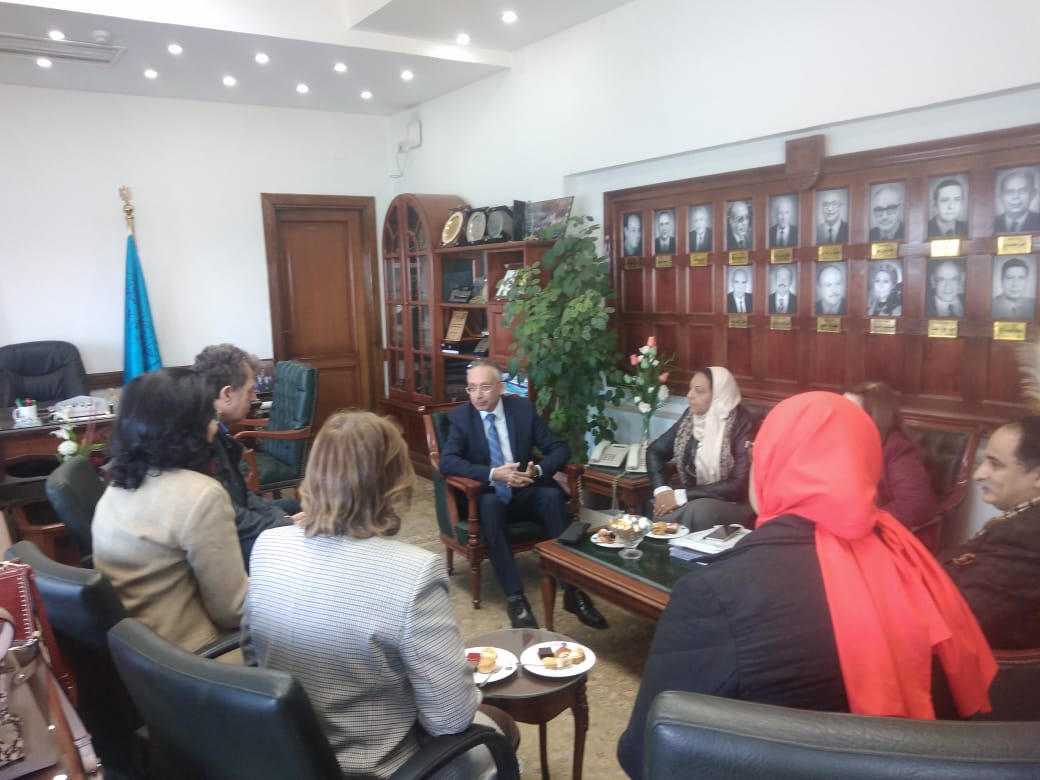
The meeting was attended by Dr. Dina Mandour, Dean of the Faculty of Fine Arts, Dr. Nevin Gharib, Vice Dean for Education and Student Affairs, Dr. Sahar El-Arnaouti, Vice Dean for Postgraduate Studies and Research, Dr. Mona El-Masry, Head of the Architecture Department, and Dr. Mai Karam, Coordinator of Cooperation with the Bauhaus University.
In his speech, Dr. Ashraf El-Ghandour stressed that the Bauhaus University is one of the oldest and most prestigious universities in Germany, specializing in plastic arts, sculpture and architecture, which will open the way for discussing means of cooperation in the fields of architecture and fine arts between the German University and Alexandria University represented by the Faculty of Fine Arts, especially in the areas of common interest.
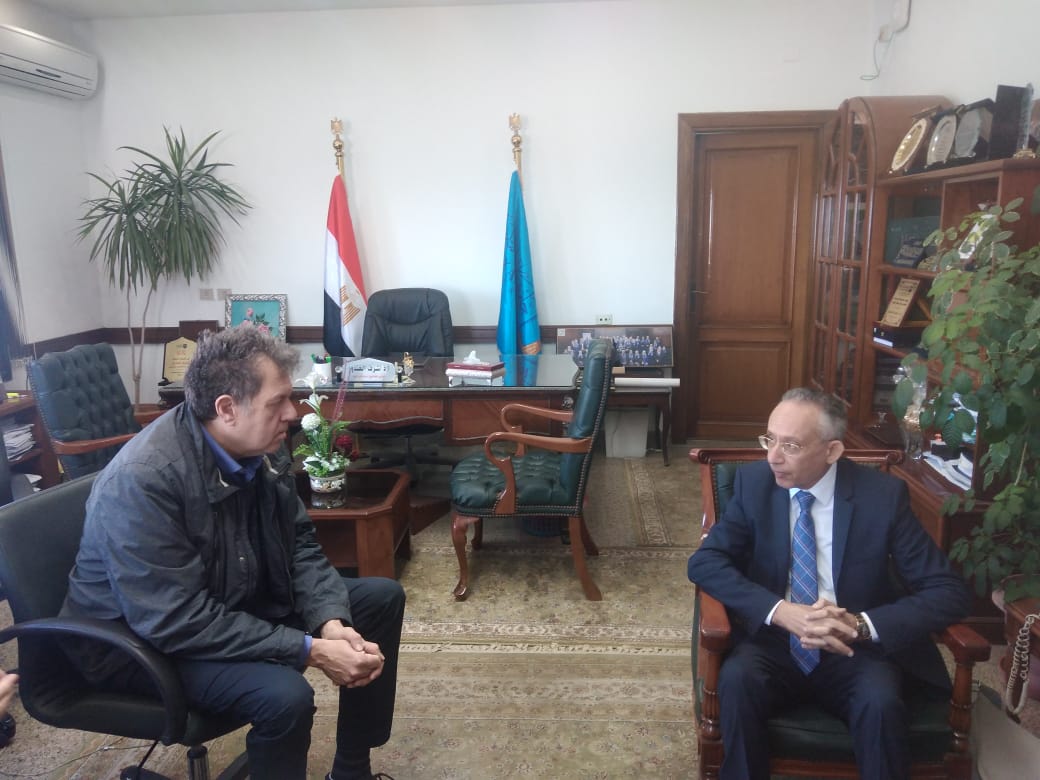
El-Ghandour pointed out that cooperation can also include the establishment of joint scientific degrees, the exchange of experiences, participation in scientific seminars and conferences, and student exchange whether on undergraduate and postgraduate levels, in order to connect with the international cooperation network in the various scientific and research fields.
While Dr. Frank Eckhardt confirmed that his university is keen to open prospects for cooperation with Alexandria University, which has a unique architectural heritage, pointing out that the Bauhaus University also possesses a unique architectural heritage, as the Bauhaus University building is one of the sites on the UNESCO list of World Heritage Sites, noting that this common historical heritage between the two universities will result in unique cooperation with Alexandria University in the fields of engineering and architecture.
Faculty of Education Hosts Third Literary Conference for Students of German School in Alexandria

Under the auspices of Professor Dr. Abdelaziz Konsowa, President of Alexandria University, and the supervision, support and guidance of Dr. Mohamed Anwar Farrag, Dean of the Faculty of Education, the faculty hosted the activities of the third literary conference for students of the German School in Alexandria (DSB), in the conference hall of the faculty, in the presence of Sister Antonia Fahmy, Vice President of the School’s Owning Authority, as well as the members of the scientific committee, including the poet Abdel Moneim Salem, Vice-President of the Writers Union in Alexandria, Dr. Ahmed El-Masry from the Department of Arabic Language at the Faculty, and Dr. Salem Abdel-Razek Suleiman, Secretary of the Conference and Vice-Dean of the Faculty for Community Service and Environmental Development.
Dr. Farrag indicated that the conference activities dealt with the study of the levels of creativity of Naguib Mahfouz, Zaid Motea Dammaj and Bertolt Brecht, pointing out that the opening session witnessed a large presence of parents and researchers, faculty vice deans and some heads of departments at the faculty.
Conclusion of Fourth Arab Youth Forum for Entrepreneurship at Faculty of Economic Studies and Political Science

Under the auspices of Professor Dr. Abdelaziz Konsowa, President of Alexandria University, the activities of the Fourth Arab Youth Forum for Entrepreneurship concluded, which was organized by the Faculty of Economic Studies and Political Science in cooperation with the Association for Economic Development and Entrepreneurship. Its activities continued for two days at the faculty's headquarters, and was attended by a group of thinkers, faculty members, executives concerned with entrepreneurship, as well as entrepreneurs who own small, medium and micro enterprise, in addition representatives of civil society organizations, led by the Businessmen Association, representatives of religious institutions, media figures, and hundreds of researchers and students.

Dr. Ahmed Wahban, Dean of the Faculty, in his speech, stressed the importance of entrepreneurship as a creative idea in light of the need for successful and constructive ideas and new mechanisms to create various jobs in light of the widespread unemployment at large rates at various national and global levels.
Dr. Suzette El-Ridi, founder of the forum and president of the Economic Development and Entrepreneurship Association, also pointed out the basic role of the forum in encouraging projects and entrepreneurship as a societal responsibility and a national duty. Dr. El-Ridi emphasized the pioneering role of the forum in transferring the expertise of specialists and academics to promising young people in order to hone their experiences and encourage them to establish innovative projects.
Dr. Abdelwahab Ghoneim - Vice President of the Arab Federation for the Digital Economy and Advisor to Cambridge College, referred in his speech to contemporary economic vocabulary and the tremendous technological developments that the world is experiencing in the twenty-first century, which in turn were reflected in entrepreneurship, and the size of the digital economy based on information technology now constitutes approximately 50 percent of the global economy.
Dr. Mona Abdellatif, Director of the City of Scientific Research and Technological Applications, pointed to the prominent role played by the forum in providing a unique opportunity to meet distinguished and creative Arab youth in the field of entrepreneurship, where experiences and knowledge are exchanged and cooperation in the field of innovation and technology is enhanced. She also stressed the importance of the conference in unifying joint efforts between multiple entities, whether hosts or various entities across the Arab world, to exchange ideas and experiences and encourage joint cooperation between Arab youth, investors, and experts in the field of entrepreneurship.
Several important topics were discussed during the forum, including “Digital Transformation and Entrepreneurship” by Dr. Abdelwahab Ghoneim, and “A Closer Look at Policies to Encourage Entrepreneurship in Egypt and the Arab Region” by Prof. Dr. Ahmed Bahaa El-Din Khairy - Professor of Industrial Engineering at the Faculty of Engineering, Alexandria University, “Entrepreneurial Marketing” by Dr. Ayman Shawky, Director of the Development Center - Arab Academy for Science and Technology, and “The Role of the Businessmen Association in Supporting Entrepreneurship and Financing Startups” by Dr. Mohamed Moharram - Chairman of the Board of Trustees of the Business Foundation - Businessmen Association In Alexandria, and “The Role of the Enterprise Development Agency in Supporting Entrepreneurs” by Mr. Salah Maged - Director of the Fourth Region - Enterprise Development Agency - Alexandria Office, while Dr. Nabil Shalabi - Founder and Chairman of the Board of Directors of Arab Pioneers House and Vice President of John Cracknell Youth Bank in England reviewed the most prominent inspiring stories of successful models in the field of entrepreneurship.
Students of the Faculty of Fine Arts, use environmental waste to create distinctive artistic murals
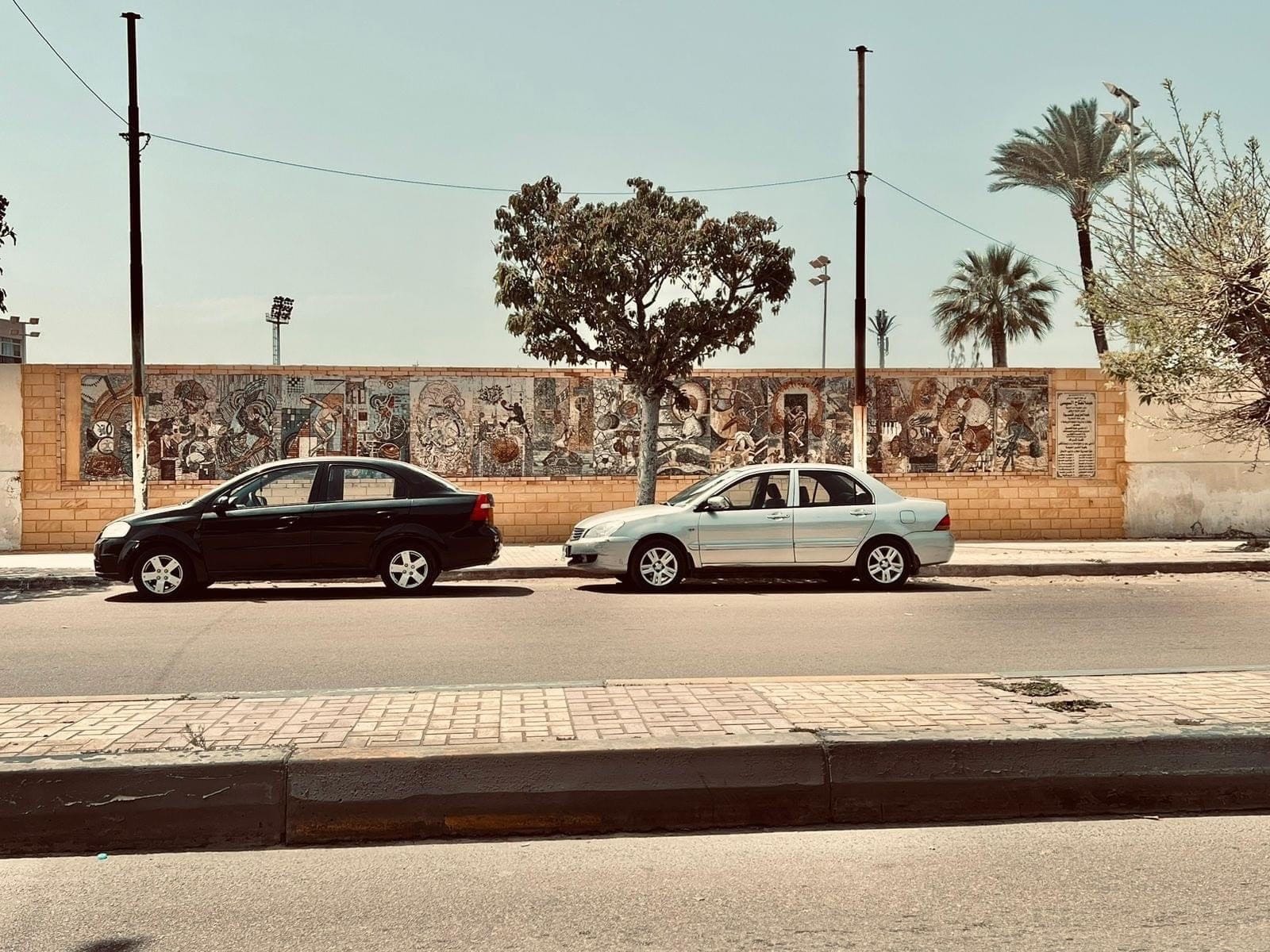
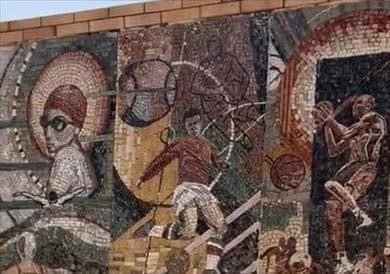
Within the framework of the role of Alexandria University in serving the community, and under the auspices of Dr. Abdel Aziz Konswa, President of Alexandria University, students of the Faculty of Fine Arts participated in implementing the sports mural on the wall of Alexandria University Stadium.
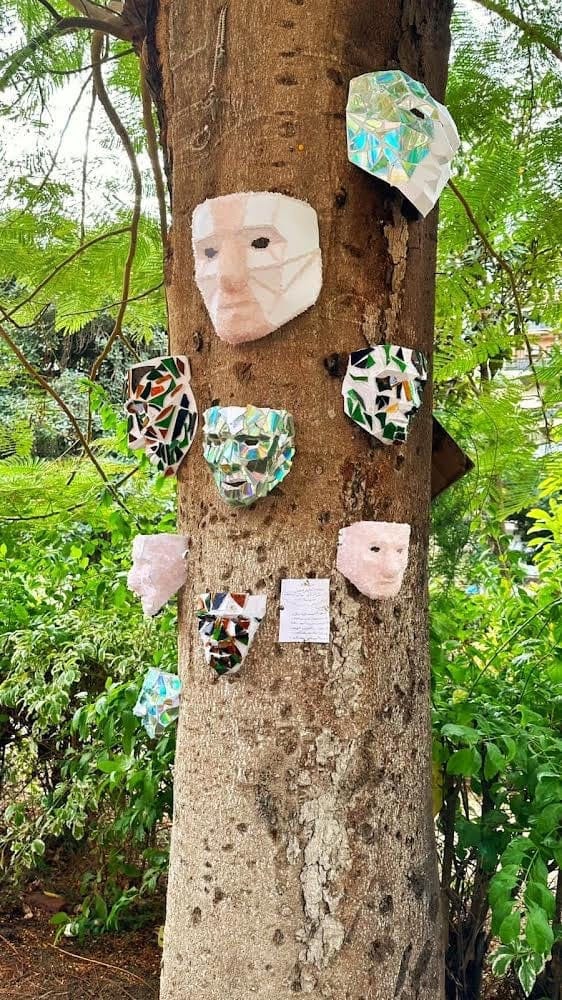
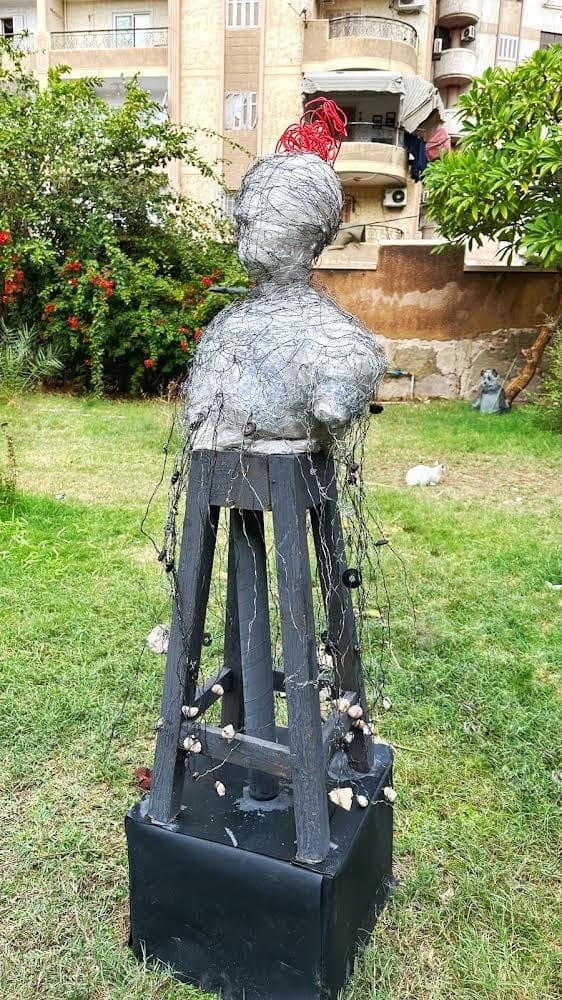
Dr. Nevin Gharib, acting dean of the faculty, indicated that the project involved 16 students from the faculty’s mural photography department as a graduation project, under the supervision of Dr. Mona Rajab and Dr. Donia Medhat, faculty members at the faculty. She explained that the project aims to recycle materials neglected in nature and transform them. For aesthetic field works in order to achieve the principle of sustainability and benefit from materials available in nature, she added that mosaics were used in implementing the entire project, and she pointed out that the students of the second year of the decoration department at the college implemented other ideas to transform environmental waste from wood and scrap into creative models with the aim of using them as cosmetic models for the fields in Alexandria for the coastal city to return to its splendor at the hands of its young artists.