 English
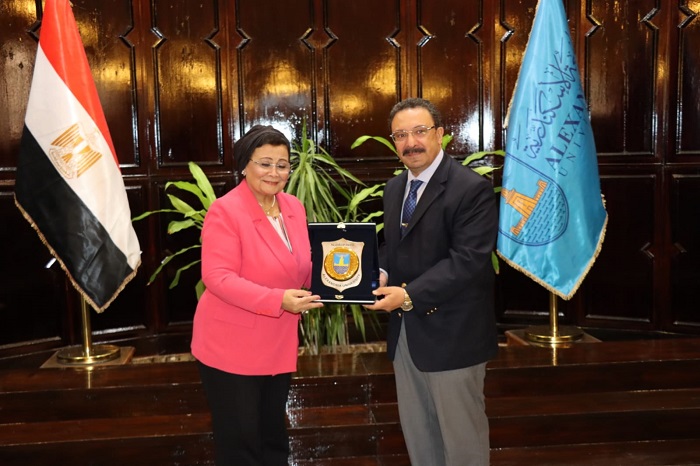
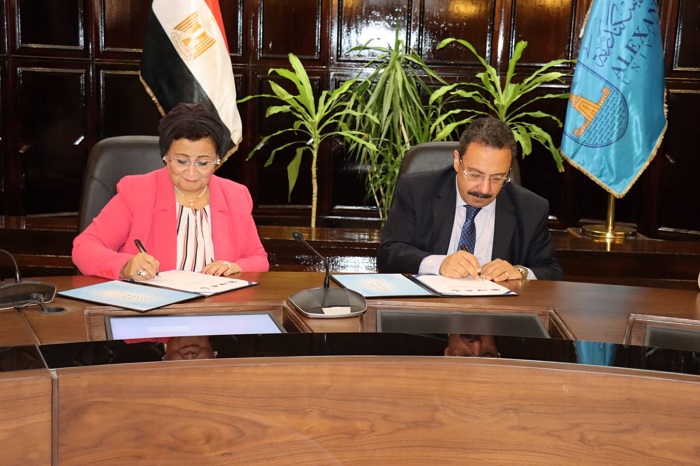
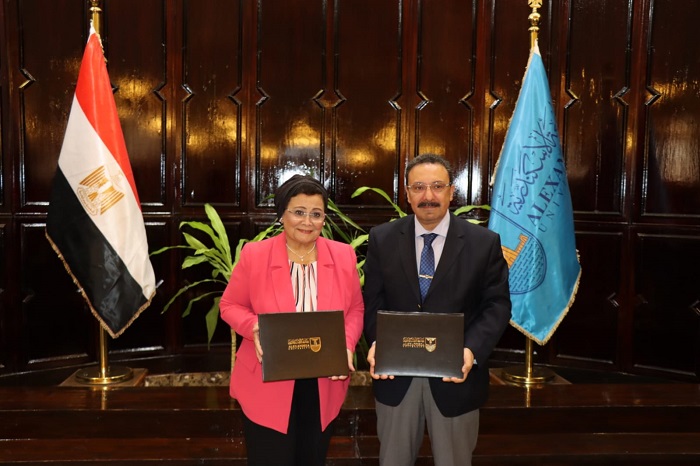
In a step that reflects the integration of state institutions' efforts to build the Egyptian citizen and promote health and community awareness, Prof. Ahmed Adel Abdel Hakim, Acting President of Alexandria University, and Dr. Abla El-Alfy, Deputy Minister of Health and Population for Population and Family Development, signed a cooperation protocol to implement the National Population and Development Strategy across Alexandria University's faculties and university hospitals.
The protocol comes within the framework of the National Population Emergency Plan and the Presidential Initiative "The Golden 1,000 Days for the Development of the Egyptian Family," with the aim of promoting reproductive health and family development awareness, improving maternal and child health indicators, and supporting the state's efforts to achieve the objectives of Egypt Vision 2030.
The protocol aims to implement a comprehensive package of health, awareness, and training programs across the university and its hospitals. These include organizing "Population Days," promoting reproductive health and family planning awareness, activating family counseling services, expanding training on the latest practices supporting natural childbirth, and launching awareness campaigns to correct common health misconceptions. These efforts are expected to contribute to reducing medically unjustified cesarean section rates, improving maternal and child health, and enhancing quality of life.
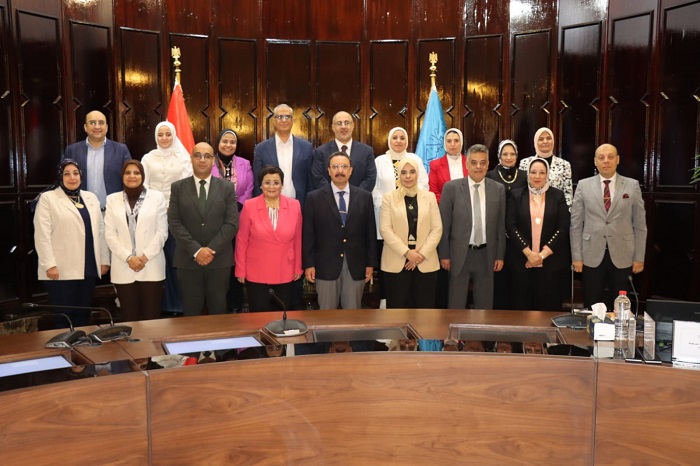
The signing ceremony was attended by Prof. Affaf Al-Oufy, Vice President for Community Service and Environmental Development; Prof. Tamer Abdallah, Dean of the Faculty of Medicine; Prof. Hanan Hosny El-Sherbiny, Dean of the Faculty of Nursing; Prof. Heba El-Qady, Dean of the High Institute of Public Health; Prof. Khaled Matrawy, Dean of the Medical Research Institute; in addition to senior officials from Alexandria University Hospitals and the Ministry of Health and Population.
Prof. Ahmed Adel Abdel Hakim emphasized Alexandria University's commitment to supporting the state's efforts to advance the healthcare system, noting that integration between university hospitals and Ministry of Health hospitals represents a key pillar for maximizing available resources and expertise, ultimately improving the quality of healthcare services provided to citizens.
He added that Alexandria University Hospitals continue to fulfill their mission of delivering distinguished medical, educational, and research services while dedicating all available resources to supporting national initiatives. He stressed that the protocol represents a practical step toward translating the state's directives into actionable programs within the university by leveraging its academic, medical, and research capabilities to serve society.
He also highlighted the importance of incorporating topics related to reproductive health and family development into the "Societal Issues" course to provide students with accurate scientific information in an engaging and accessible manner, helping to correct misconceptions, promote healthy behaviors, and reduce medically unnecessary cesarean deliveries. He further affirmed that Egypt has achieved remarkable progress in developing its healthcare system and now provides healthcare services in accordance with the highest quality standards, stressing that cooperation among all healthcare institutions is essential to delivering the best possible services to citizens.
For her part, Dr. Abla El-Alfy affirmed that cooperation with Alexandria University comes in implementation of the directives of the Ministers of Higher Education and Scientific Research and Health and Population to strengthen coordination among state institutions, improve healthcare quality, and promote awareness of priority public health issues.
She reviewed the achievements of the 2025 Population and Development Executive Plan, highlighting improvements in maternal and child health and family development indicators, as well as the key features of the 2026/2027 Executive Plan, which aims to further improve health indicators, reduce medically unnecessary cesarean deliveries, and enhance newborn health through coordinated efforts among various state institutions.
She also noted that the Ministry of Health and Population continues to implement awareness and media campaigns in cooperation with various partners to promote health culture and correct misconceptions related to reproductive, maternal, and child health, emphasizing that cooperation among the media, universities, and the healthcare sector is fundamental to improving health indicators. She described university students as key partners in spreading awareness within families and society.
At the conclusion of the meeting, both parties agreed to begin implementing the protocol through a joint action plan that includes awareness programs, training initiatives, and capacity-building activities, reinforcing Alexandria University's role as a key partner in promoting public health awareness and supporting the state's efforts to improve population and health indicators toward building a healthier, more aware, and more sustainable society.