
 English
Faculty News
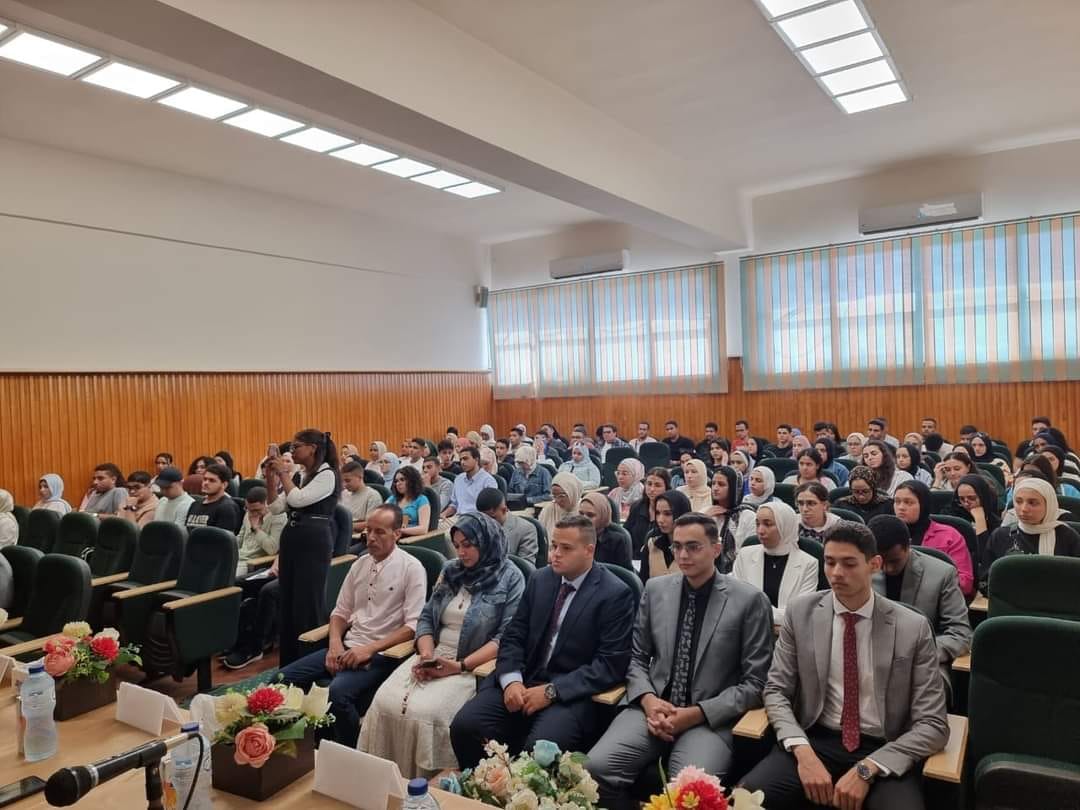
Inauguration of “Interdisciplinary and Cross-Disciplinary Studies in Higher Education” Seminar at Institute of Graduate Studies and Research

Under the auspices of Professor Dr. Abdelaziz Konsowa, President of Alexandria University, the university hosted the Egyptian National Interdisciplinary Network (ENIN), to hold a symposium on “Interdisciplinary Studies in Higher Education,” in the conference hall of the Institute of Graduate Studies and Research. The event was attended by Dr. Hesham Saeed, Vice President of Alexandria University for Graduate Studies and Research, Dr. Ahmed Abdelrehim, Acting Dean of the Institute of Graduate Studies and Research, Dr. Boshra Salem, Network Coordinator, Assistant President of the University for International University Ranking, and a group of researchers in various disciplines and those interested in interdisciplinary and cross-disciplinary sciences from various Egyptian universities.

In his speech, Dr. Hesham Saeed confirmed that the symposium aims at defining a vision, strategies, and future outlook for interdisciplinary, cross-disciplinary and transient sciences, noting that this symposium is the second, as the first meeting was in May 2023 in Cairo under the patronage of Professor Dr. Ayman Ashour, Minister of Higher Education and Scientific Research, in cooperation With the Egyptian Knowledge Bank, during which the Egyptian National Interdisciplinary Network was announced.
Dr. Saeed added that the need for multidisciplinary curricula has become more urgent than ever before, as collective efforts and interdisciplinary, diverse, and overlapping disciplines can shape the path of knowledge and create significant, meaningful changes and impacts. He pointed out that interdisciplinary and cross-disciplinary sciences are considered an important field that brings together many different disciplines and scientific fields that interact with each other, and cooperate to solve problems and explore complex topics that transcend the boundaries of traditional disciplines.
He added that through this type of science, methods and concepts from different disciplines such as chemistry, physics, biology, mathematics, and biostatistics are employed to understand the natural phenomena in a deeper and broader way, as well as concepts and approaches in various fields such as medicine, engineering and computers to produce innovative solutions to scientific problems, and to enhance cooperation between researchers and specialists in multiple fields in order to face current global challenges and achieve progress and prosperity in various scientific fields and human technology.
Dr. Saeed stressed that biochemistry, nanoscience, and biology neuroscience are some of the interdisciplinary fields that have grown into their own specializations. He added that trans-science is one through which non-academic stakeholders can be involved in the knowledge production process and is considered a promising idea for addressing the world's most pressing issues, knowledge production and decision-making.

While Dr. Boshra Salem gave a presentation on the Egyptian National Interdisciplinary Network (ENIN), and its scope and objectives. Salem indicated that interdisciplinary sciences have an important and vital role in confronting many of the phenomena occurring in the world, such as the phenomenon of climate change, which requires cooperation between different disciplines to reach innovative solutions involving relevant experts. She pointed out that the network aspires to achieve cooperation between Egyptian universities in the interdisciplinary sciences to deal with complex challenges that individual disciplines are unable to deal with. She also added that Alexandria University seeks to activate this idea by hosting the Egyptian National Interdisciplinary Network in Universities is in its first activity since its launch in May 2023, with the aim of disseminating the idea of interdisciplinary programs in higher education, especially since it is one of the pillars of the 2030 Strategy of the Ministry of Higher Education and Scientific Research.


Faculty of Economics and Political Science Organizes Egyptian House of Representatives Simulation Model
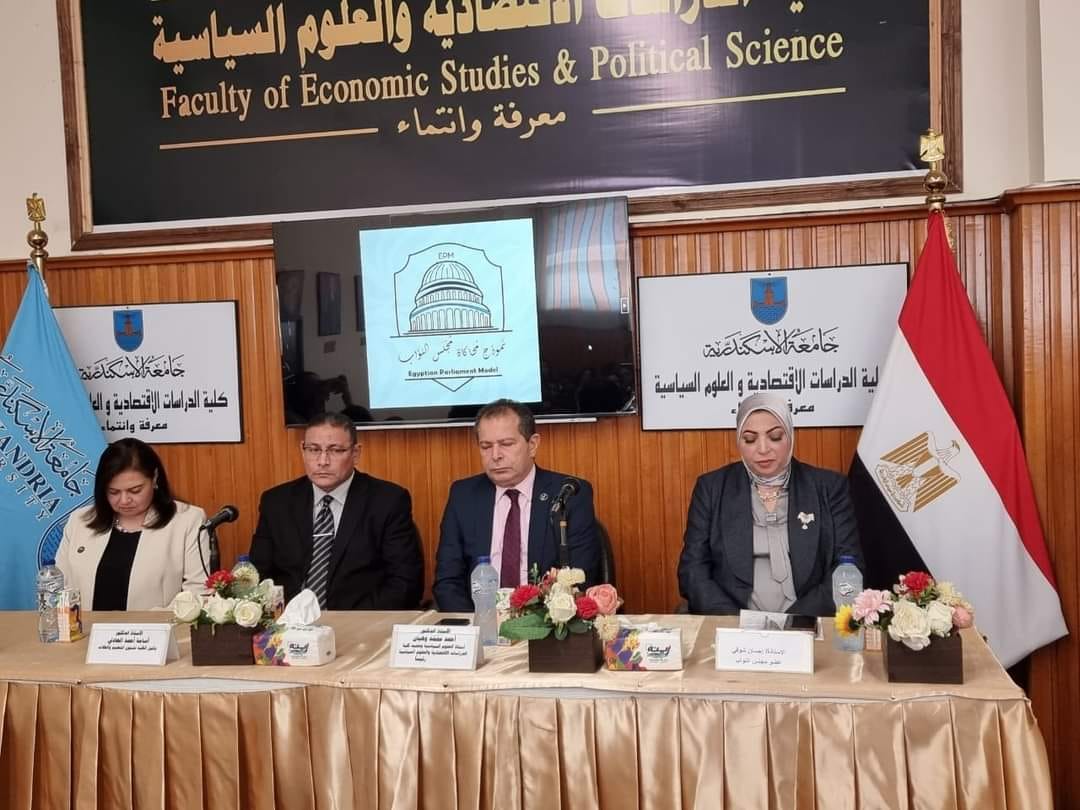
Under the auspices of Professor Dr. Abdelaziz Konsowa, President of Alexandria University, Dr. Ahmed Wahban, Dean of the Faculty of Economics and Political Science, inaugurated the sessions of the simulation model of the Egyptian House of Representatives for the current academic year 2024/2025, in the presence of a number of members of the Egyptian House of Representatives, and the participation of dozens of students from the Faculty of Economics and Political Science from the Arabic and English departments
In his speech, Dr. Wahban praised the selection of the Egyptian House of Representatives as the first simulation model event this year, considering that it is the representative of the Egyptian people and the core of parliamentary democracy, pointing to the excellent level of the students of the Faculty of Economics and Political Science, whether at the academic level, or in terms of participation in scientific, cultural and training activities and events, most notably simulation models, the debate program, the language club, the scientific research team, and other activities.
Dr. Osama El-Adly, the faculty's vice dean for education and student affairs, confirmed that the training activities and events such as simulation models are an integral part of the formation of political science and economics graduates, explaining that the House of Representatives simulation model is the beginning of other models that the faculty intends to activate during this academic year such as simulation models of the League of Arab States, the UN Security Council, the stock exchange, banking processes, etc.
Representatives Mona Omar and Ihsan Shawky, members of the House of Representatives, praised the event and stressed their readiness to provide information and support to the students of the model regarding their experiences as parliament members, whether in relation to general sessions or committees work or others.
President of Alexandria University Issues Decisions Appointing New Vice Deans
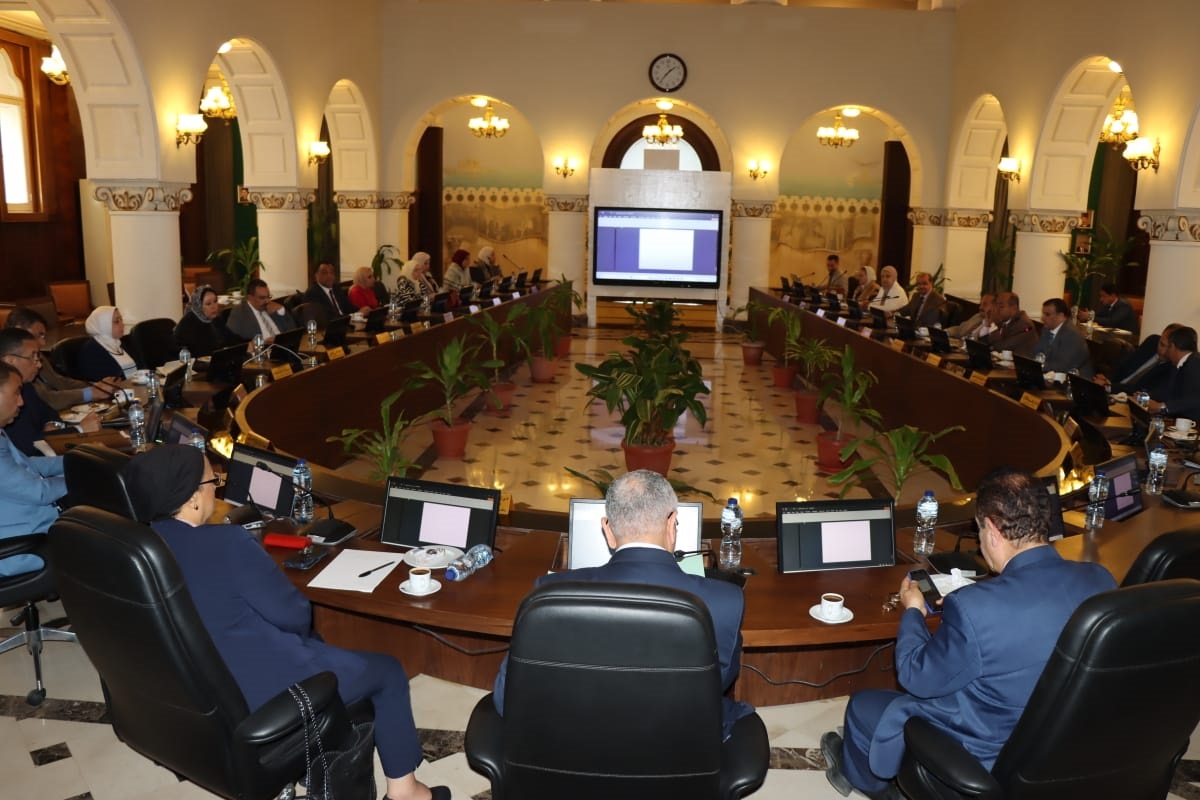
Dr. Abdelaziz Konsowa, President of Alexandria University, issued decisions appointing new vice deans, as follows:
- Dr. Maha Ramzy Mohamed Taalab, Professor at the Faculty of Dentistry, as Vice Dean for Community Service and Environmental Development Affairs for a period of three years.
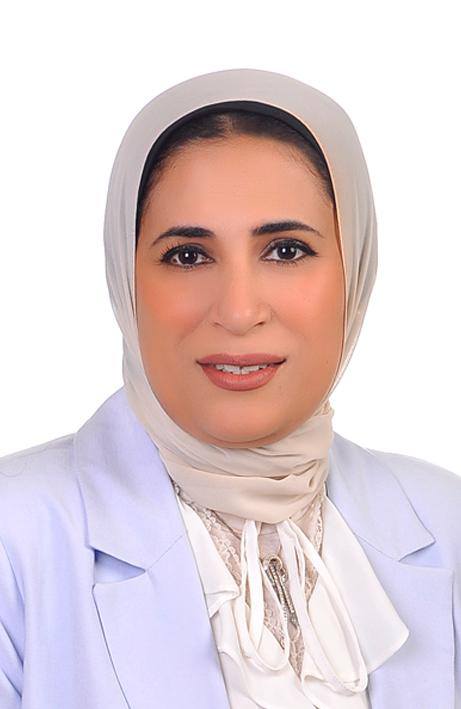
- Dr. Dalia El-Sayed Metwally Ragab, Professor at the Medical Research Institute, as Vice Dean for Community Service and Environmental Development Affairs for a period of three years.
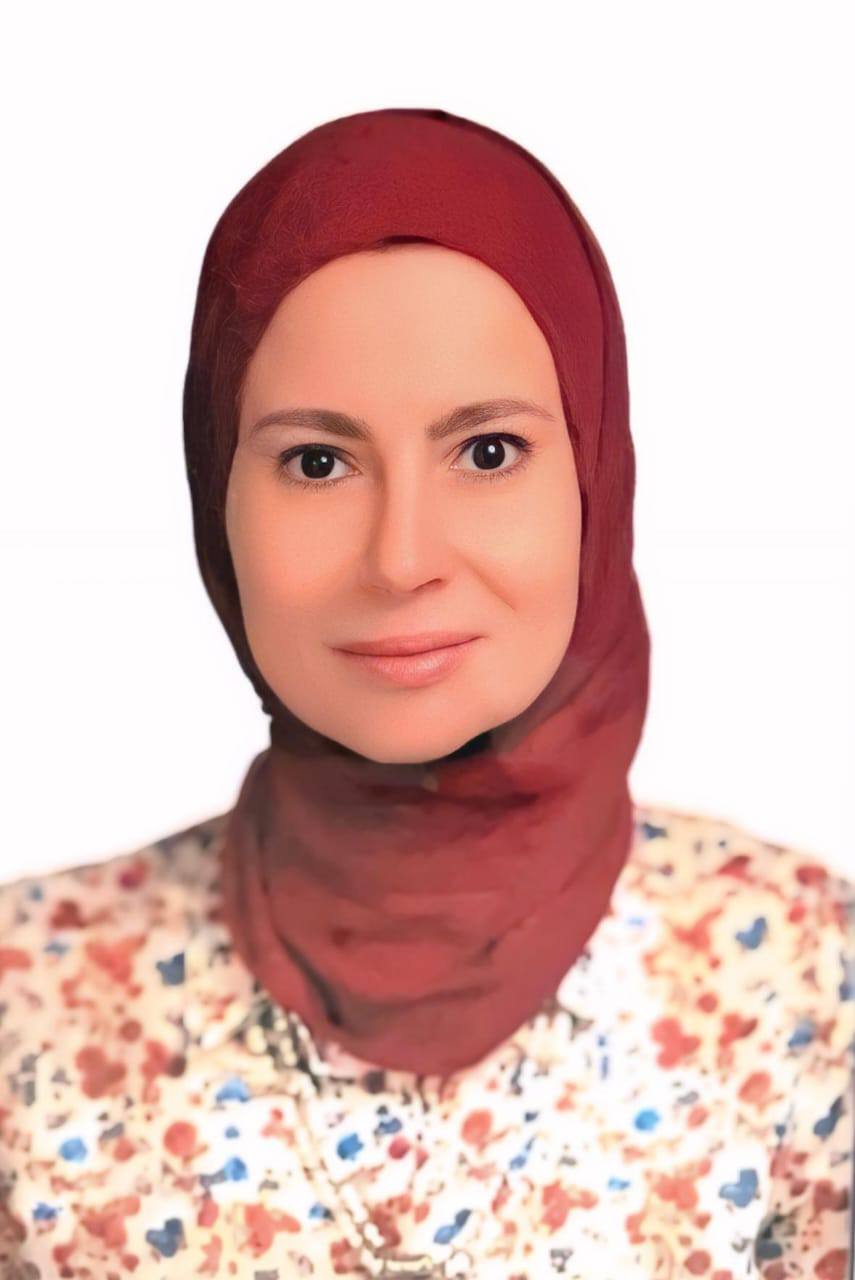
- Dr. Zeinab Nazih Ali Shata, Professor at the Higher Institute of Public Health, as Vice Dean for Community Service and Environmental Development Affairs for a period of three years.
Students from the Faculty of Engineering achieve advanced positions in the competition for the best research poster award during the Second International Symposium for Applied Water Research

Alexandria University students participated in the “Second International Symposium for Applied Water Research in the Private and Public Sectors,” which was organized by Ain Shams University during the period from 25-26 October and included activities and competitions for the best student research poster presentation, where the student Mosaad Darwish, a student in the Civil and Environmental Engineering Program at the Faculty of Engineering, won the second place award, while Salma Al-Shabrawi, a master’s student at the Faculty of Engineering, won the third place award.
Launch of Second International Conference of the Department of Educational Administration and Education Policies

Under the auspices of Professor Dr. Abdelaziz Konsowa, President of Alexandria University, the activities of the second international conference of the Department of Educational Administration and Education Policies at the Faculty of Education were concluded. The conference took place two days ago at the faculty’s headquarters under the title: “Leadership of Educational Institutions: Contemporary Visions and Directions”, with the participation of faculty members in Egyptian universities, and several education leaders in Alexandria.
Dr. Mohamed Anwar Farrag, Dean of the Faculty of Education, indicated that the conference provided an opportunity for dialogue and the presentation of scientific papers and research that contributed to the addition of many ideas, and urged researchers to think and explore new topics in educational leadership. He explained that the recommendations of the conference included themes related to the development of scientific research in the field of educational leadership, and another related to the qualification of educational leaders in the light of some contemporary leadership trends.
Dr. Mohamed Khamis Harb, Head of the Department of Educational Administration and Education Policies at the Faculty and Chairman of the Conference, indicated that the concluding recommendations of the conference included the need to pay attention to inter-studies in the field of educational leadership and to focus on generating new fields of knowledge, such as leadership psychology, digital leadership, school curriculum leadership, leadership of learning communities, green leadership, and leadership education. This requires reshaping the research maps of the educational administration departments at the faculties of education in Egyptian and Arab universities to include those studies in them, directing postgraduate students to adhere to these maps and research them.
He added that the recommendations included directing researchers to work on the transfer of educational policies, focusing on the fact that the main goal of transfer is to reform educational institutions, setting a strategy for qualifying educational leaders before and during service in light of the quality standards of educational leadership, provided that this strategy is announced through the official media of the Ministry of Education, in which all concerned parties, stakeholders and leaders at all administrative levels participate. In addition, activating the advisory role of the faculties of education as houses of expertise for educational leaders, and for future managers to acquire new skills to develop themselves professionally, work with others, use effective dialogue, successful negotiation, and decision-making skills, and dealing with individuals and groups. Finally, the formation of a committee chaired by the Head of the Department of Educational Administration and Education Policies, which includes representatives of academic leaders in the faculties of education, as well as representatives of senior leaders in the Ministry of Education’s general office, middle leaders in educational departments and executive leaders in schools, to publish recommendations in all education institutions and departments and follow up on what has been achieved, to be presented at the third conference next year.

